

-
We’re On Call 24/7 : +8613538296050
-
E-mail : anna@rohoconnector.com
We’re On Call 24/7 : +8613538296050
E-mail : anna@rohoconnector.com
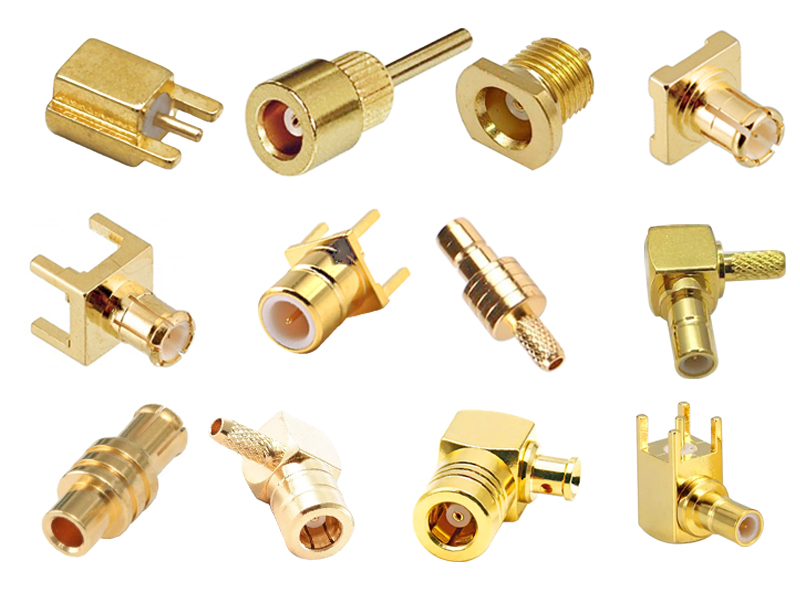
In the world of RF and microwave interconnections, the SubMiniature B (SMB) connector has earned a reputation for versatility, convenience, and cost-effectiveness. With its snap-on coupling mechanism and reliable performance up to 4 GHz (and up to 10 GHz in precision variants), the SMB connector has become a staple in telecommunications, base station equipment, automotive electronics, and consumer devices. However, the SMB does not exist in isolation. Several similar connectors—including SMA, SMC, MCX, MMCX, BNC, and FAKRA—offer overlapping capabilities but with distinct differences that engineers must understand when selecting the optimal interface for their application.
This report provides a comprehensive comparison of SMB connectors with their closest analogues, examining the similarities and differences that define their respective roles in modern RF systems.
SMB Connector Overview
Before comparing, let us establish the SMB connector's key attributes:
Frequency Range: DC to 4 GHz (standard), up to 10 GHz (precision)
Impedance: 50 Ω (primary), 75 Ω (available for video/CATV)
Coupling: Snap-on (spring-loaded outer contact)
Gender: Male (plug) and female (jack)
Size: Small (outer diameter ~4.5–5.0 mm)
Mating Cycles: 500 (typical)
Typical Applications: Telecommunications, base stations, automotive, GPS, test equipment, consumer electronics
SMB connectors are characterized by their ease of use—the snap-on coupling allows for quick connection and disconnection without tools—and their compact size, which enables dense packaging. They are often used as an alternative to threaded connectors where connection security is less critical than speed and convenience.
SMB vs. SMA Connectors
SMA (SubMiniature version A) connectors are among the most widely recognized high-frequency interfaces. While both SMB and SMA are "subminiature" connectors, they differ fundamentally in coupling mechanism, frequency capability, and application philosophy.
Similarities:
Both are 50 Ω impedance (primarily)
Both are compact compared to larger connectors like N-Type
Both are widely used in telecommunications and test equipment
Both have similar gender definitions (male with center pin)
Both are available in standard and reverse-polarity versions
Both offer good durability with 500 mating cycles
Differences:
| Feature | SMA | SMB |
| Frequency Range | DC – 18 GHz (standard), 26.5 GHz (precision) | DC – 4 GHz (standard), up to 10 GHz (precision) |
| Coupling | Threaded (1/4-36 UNF) | Snap-on (spring-loaded) |
| Connection Security | Very high (threaded) | Moderate (snap-on) |
| Vibration Resistance | Excellent | Good |
| Mating/Unmating Speed | Slow (threaded) | Fast (snap-on) |
| Mating Cycles | 500 (standard), up to 1,000 (precision) | 500 |
| Size | Small (~5 mm OD) | Small (~4.5–5.0 mm OD) |
| Cost | Low to moderate | Low |
| Typical Applications | Test, microwave, aerospace, general RF | Telecom, base stations, automotive, consumer |
Key Trade-Offs:
SMA provides a more secure connection due to threaded coupling, making it superior for applications where vibration and mechanical stress are concerns.
SMB's snap-on coupling enables much faster mating/unmating, which is advantageous in assembly and maintenance environments.
SMA supports significantly higher frequencies (18–26.5 GHz) compared to SMB (4–10 GHz).
SMB connectors are generally less expensive and easier to terminate than SMA.
SMA's threaded design provides more consistent electrical contact and lower VSWR at higher frequencies.
When to choose SMB over SMA:
When quick connection/disconnection is prioritized over security
When operating below 4 GHz (or 10 GHz for precision variants)
When cost is a primary constraint
When field installation requires ease of use without torque wrenches
When to choose SMA over SMB:
When operating above 4–10 GHz
When maximum vibration resistance is required
When connection security is critical
When precision measurements and low VSWR are required at high frequencies
SMB vs. SMC Connectors
SMC (SubMiniature C) connectors are mechanically similar to SMB but use a threaded coupling mechanism instead of snap-on. They are often considered the "threaded version" of SMB, offering increased security at the cost of speed.
Similarities:
Both are part of the "subminiature" family (SMB and SMC were developed concurrently)
Both are 50 Ω impedance (primarily)
Both have similar physical dimensions and footprint
Both have similar frequency range (DC – 4 GHz, up to 10 GHz for precision)
Both are used in telecommunications and compact systems
Both have similar 500 mating cycle ratings
Differences:
| Feature | SMB | SMC |
| Coupling | Snap-on (quick connect/disconnect) | Threaded (1/4-36 UNF) |
| Connection Security | Moderate | High (threaded) |
| Vibration Resistance | Good | Excellent |
| Mating/Unmating Speed | Fast | Slow |
| Typical Applications | Telecom, automotive, consumer | Military, aerospace, vibration-prone |
Key Trade-Offs:
SMC provides superior connection security and vibration resistance due to its threaded coupling.
SMB offers faster mating/unmating, which is advantageous for frequent connections.
Both connectors have similar frequency and size characteristics, making the choice primarily mechanical.
SMC connectors are less common and slightly more expensive than SMB.
When to choose SMB over SMC:
When quick connection is prioritized over security
When cost is a concern
For general-purpose applications where vibration is not severe
When to choose SMC over SMB:
When vibration resistance is critical
When connection security is paramount
When compatibility with existing SMC-based systems is required
SMB vs. MCX Connectors
MCX (Micro Coaxial) connectors are a smaller, snap-on alternative to SMB, designed for even more compact applications. They offer similar ease of use but in a smaller package with lower power handling.
Similarities:
Both use snap-on (push-on) coupling
Both are 50 Ω impedance
Both offer quick connection/disconnection
Both are used in compact systems and portable devices
Both are available in right-angle configurations
Differences:
| Feature | SMB | MCX |
| Frequency Range | DC – 4 GHz (standard), up to 10 GHz (precision) | DC – 6 GHz (standard) |
| Size | Small (~4.5–5.0 mm OD) | Very small (~3.0–3.5 mm OD) |
| Panel Density | Good | Very high (30–50% smaller than SMB) |
| Power Handling | Moderate | Lower (smaller contacts) |
| Mating Cycles | 500 | 500 |
| Axial Float | Minimal | Minimal |
| Typical Applications | Telecom, base stations, automotive | Portable devices, GPS, small modules, IoT |
Key Trade-Offs:
MCX is significantly smaller than SMB, enabling higher panel density in space-constrained applications.
SMB handles slightly more power due to larger contact area.
MCX has a slightly higher frequency range (6 GHz) compared to standard SMB (4 GHz).
SMB connectors are generally more robust and easier to handle than MCX.
When to choose SMB over MCX:
When slightly larger size is acceptable for greater robustness
When power handling is a consideration
When compatibility with existing SMB infrastructure is required
When to choose MCX over SMB:
When maximum panel density is required
When operating up to 6 GHz
When size and weight are critical constraints
For portable and handheld devices
SMB vs. MMCX Connectors
MMCX (Micro-Miniature Coaxial) connectors are even smaller than MCX, representing the next level of miniaturization. They are designed for ultra-compact applications where every millimeter counts.
Similarities:
Both use snap-on (push-on) coupling
Both are 50 Ω impedance
Both offer quick connection/disconnection
Both are used in compact, portable devices
Both are available in right-angle configurations
Differences:
| Feature | SMB | MMCX |
| Frequency Range | DC – 4 GHz (standard), up to 10 GHz (precision) | DC – 6 GHz (standard) |
| Size | Small (~4.5–5.0 mm OD) | Ultra-small (~2.4–2.5 mm OD) |
| Panel Density | Good | Extremely high (50% smaller than MCX) |
| Mating Cycles | 500 | 500 |
| Power Handling | Moderate | Very low (smallest contacts) |
| Typical Applications | Telecom, automotive | Wearables, smartphones, embedded modules, medical devices |
| Latching Force | Moderate | Light (easier to disconnect) |
Key Trade-Offs:
MMCX is approximately 50% smaller than MCX and significantly smaller than SMB, enabling the highest possible panel density.
SMB and MCX offer greater robustness and easier handling due to larger size.
MMCX connectors are more delicate and require careful handling to prevent damage.
MMCX has a higher frequency range (6 GHz) compared to standard SMB (4 GHz).
When to choose SMB over MMCX:
When robustness and ease of handling are important
When power handling is a consideration
When compatibility with existing SMB infrastructure is required
When to choose MMCX over SMB:
When maximum miniaturization is required
When size and weight are extremely critical
For wearable devices, smartphones, and embedded applications
When operating up to 6 GHz
SMB vs. BNC Connectors
BNC (Bayonet Neill–Concelman) connectors are larger, quick-connect connectors widely used in test and measurement and video applications. While they serve different frequency ranges and form factors, they share the "quick-connect" design philosophy.
Similarities:
Both offer quick connection/disconnection (bayonet for BNC, snap-on for SMB)
Both are available in 50 Ω and 75 Ω versions
Both are widely used in test and measurement
Both have a similar gender definition (male with center pin)
Both are used in telecommunications and video applications (75 Ω versions)
Differences:
| Feature | BNC | SMB |
| Frequency Range | DC – 4 GHz (standard), up to 6 GHz (precision) | DC – 4 GHz (standard), up to 10 GHz (precision) |
| Coupling | Bayonet (quarter-turn) | Snap-on (push-on) |
| Size | Medium (~10–12 mm OD) | Small (~4.5–5.0 mm OD) |
| Panel Density | Low to moderate | Very high |
| Mating/Unmating Speed | Fast (quarter-turn) | Fast (push-on) |
| Mating Cycles | 500 | 500 |
| Power Handling | Moderate | Low to moderate |
| Typical Applications | Lab equipment, video, test | Telecom, automotive, compact systems |
Key Trade-Offs:
BNC is physically much larger than SMB, limiting panel density but improving handling and durability.
SMB offers similar frequency performance in a significantly smaller package.
BNC's bayonet coupling provides a distinct tactile engagement, while SMB's snap-on requires pushing directly.
BNC is more common in laboratory environments; SMB is more common in field equipment.
When to choose SMB over BNC:
When panel density is critical
When space is limited
For field applications where size and weight are concerns
When to choose BNC over SMB:
When handling and durability are important (larger size)
When compatibility with standard lab equipment is required
When operating in test and measurement environments
For video applications using 75 Ω impedance
SMB vs. FAKRA Connectors
FAKRA (Fachkreis Automobil) connectors are a standardized automotive interface derived from the SMB design but with key differences tailored to automotive applications. They are essentially SMB connectors with color-coded housings, mechanical keying, and secondary locking features.
Similarities:
Both are derived from the same SMB contact design (FAKRA is an evolution of SMB)
Both use snap-on coupling
Both are 50 Ω impedance
Both are used in automotive and telecommunications
Both are available in right-angle configurations
Differences:
| Feature | SMB | FAKRA |
| Frequency Range | DC – 4 GHz (standard), up to 10 GHz (precision) | DC – 6 GHz (typical) |
| Coupling | Snap-on (smooth) | Snap-on with secondary locking latch |
| Mechanical Keying | None (can be mated in any orientation) | Yes (color-coded housings prevent incorrect mating) |
| Secondary Lock | No | Yes (latch prevents accidental disconnection) |
| Size | Small (~4.5–5.0 mm OD) | Larger (due to housing and locking features) |
| Vibration Resistance | Good | Excellent (secondary locking) |
| Typical Applications | Telecom, automotive, consumer | Automotive (GPS, cellular, radio, sensors) |
| Cost | Low | Higher (due to housing and keying features) |
Key Trade-Offs:
FAKRA provides superior vibration resistance and prevents incorrect mating through keying and secondary locking.
SMB is smaller and less expensive, but lacks the safety and orientation features of FAKRA.
FAKRA has a slightly higher frequency range (6 GHz) compared to standard SMB (4 GHz).
FAKRA connectors are designed for the automotive environment, including temperature extremes and vibration.
When to choose SMB over FAKRA:
When space is more limited
When cost is a primary constraint
For non-automotive applications where keying is not required
When to choose FAKRA over SMB:
For automotive applications where vibration is significant
When keying is required to prevent incorrect connections
When secondary locking is needed for safety
For compatibility with automotive industry standards
| Feature | SMB | SMA | SMC | MCX | MMCX | BNC | FAKRA |
| Max Frequency | 4–10 GHz | 18–26.5 GHz | 4–10 GHz | 6 GHz | 6 GHz | 4–6 GHz | 6 GHz |
| Coupling | Snap-on | Threaded | Threaded | Snap-on | Snap-on | Bayonet | Snap-on with latch |
| Connection Security | Moderate | Very high | Very high | Moderate | Low | Moderate | High |
| Vibration Resistance | Good | Excellent | Excellent | Good | Moderate | Moderate | Excellent |
| Size | Small | Small | Small | Very small | Ultra-small | Medium | Medium |
| Panel Density | Very high | Good | Good | Extremely high | Maximum | Low | Moderate |
| Mating Cycles | 500 | 500–1,000 | 500 | 500 | 500 | 500 | 500 |
| Keying/Secondary Lock | No | No | No | No | No | No | Yes (color-coded) |
| Primary Use | Telecom, automotive | Test, microwave | Military, aerospace | Portable, compact | Wearables, medical | Lab, video, test | Automotive |
Intermating and Adapters
A critical point: SMB connectors are not mechanically compatible with any of the above connector types. They cannot be mated directly with SMA, SMC, MCX, MMCX, BNC, or FAKRA connectors. Adapters are required to convert between these interfaces.
| Adapter Type | Purpose |
| SMB to SMA | Connect SMB-based modules to SMA test cables and equipment |
| SMB to BNC | Interface compact SMB equipment to standard BNC lab instruments |
| SMB to FAKRA | Connect SMB-based modules to automotive FAKRA cables |
| SMB to MCX | Convert between different sizes of snap-on connectors (requires careful mechanical matching) |
When using adapters, be aware that each adapter introduces additional insertion loss (typically 0.05–0.15 dB), degrades VSWR slightly, and may reduce the overall frequency range to the lower of the two connector types.
Selection Guidelines for Engineers
When choosing between SMB and its analogues, consider the following factors:
| Application Priority | Recommended Connector | Key Reasons |
| Highest frequency (>10 GHz) | SMA (18–26.5 GHz) | Frequency capability |
| Quick-connect with high security | SMC (threaded) | Security with similar size |
| Maximum panel density | MMCX or MCX | Smallest size |
| Vibration-prone environment | SMA, SMC, FAKRA | Threaded or secondary lock |
| Automotive application | FAKRA | Keying, secondary lock, automotive spec |
| Cost-sensitive, moderate performance | SMB | Balance of cost and performance |
| Lab environment, standard test | BNC | Standardization, availability |
| Portable/handheld device | MCX or MMCX | Size and weight constraints |
Market Trends and Future Outlook
Several trends are shaping the evolution of SMB and its analogues:
Miniaturization: The demand for smaller connectors in portable devices is driving growth in MCX, MMCX, and even smaller interfaces.
Automotive expansion: The increasing complexity of automotive electronics (GPS, cellular, V2X, sensors) continues to fuel demand for FAKRA connectors.
Higher frequencies: As systems move to higher bands, SMB's 4 GHz limit is being pushed by precision variants to 10 GHz, but SMA and other threaded connectors remain the choice for microwave frequencies.
Cost reduction: SMB connectors benefit from high-volume manufacturing, making them a cost-effective choice for telecommunications and consumer applications.
Automation: In manufacturing, SMB's snap-on coupling is preferred for high-speed automated assembly over threaded connectors.
Conclusion
The SMB connector occupies a sweet spot in the RF connector ecosystem: it offers ease of use, compact size, and reliable performance up to 4 GHz (or 10 GHz for precision variants), all at a low cost. Its analogues—SMA, SMC, MCX, MMCX, BNC, and FAKRA—each offer overlapping but distinct capabilities, with trade-offs in frequency, size, connection security, vibration resistance, cost, and application-specific features.
When selecting between SMB and its analogues, the decision hinges on several factors:
Frequency: For >10 GHz, move to SMA or higher-frequency connectors. For <4 GHz, SMB and BNC are both viable.
Connection Speed: For fast connections without tools, SMB, MCX, MMCX, and BNC are preferred over threaded SMA and SMC.
Connection Security: For vibration-prone environments, SMA, SMC, or FAKRA (with secondary lock) are better choices.
Space Constraints: For maximum density, MMCX and MCX are the smallest; SMB offers a good balance of size and robustness.
Application: For automotive, FAKRA is the standard; for lab test, BNC is the default; for general telecom, SMB is often the optimal choice.
Understanding the similarities and differences between SMB and its analogues enables engineers to select the optimal connector for each application, ensuring signal integrity, reliability, manufacturability, and cost-effectiveness across the RF system.