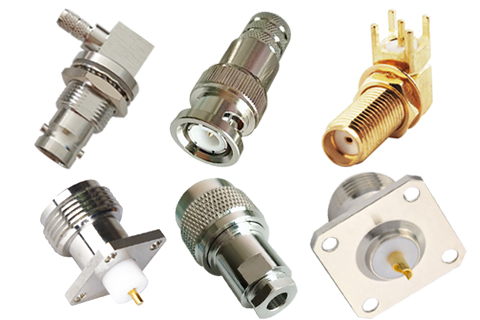
RF connectors play a critical role in establishing reliable and efficient connections in the world of radio frequency (RF) applications. Among the wide array of connector options available, BNC connectors and BNC female connectors have emerged as popular choices due to their simplicity and versatility. BNC connectors, short for Bayonet Neill–Concelman connectors, ...
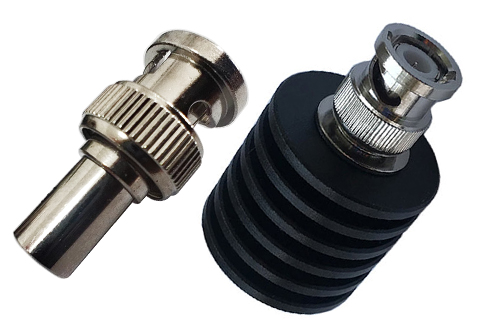
In the world of electronics, from bustling research labs to complex broadcast trucks, there is a simple, ubiquitous device that stands as a silent guardian of signal integrity: the BNC terminator. Often overlooked, this component plays a critical role in ensuring accurate measurements, protecting sensitive equipment, and stabilizing systems. As systems evolve towards higher frequenci...
In the diverse ecosystem of RF connectors, the TNC (Threaded Neill–Concelman) interface occupies a unique and essential niche. Sharing the same miniature form factor as the ubiquitous BNC connector, the TNC distinguishes itself with a threaded coupling mechanism that provides exceptional reliability in environments where vibration and mechanical stress are concerns . This ...
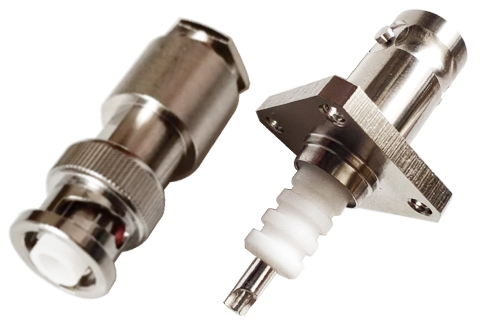
In the diverse landscape of RF coaxial connectors, the MHV (Miniature High Voltage) interface occupies a unique niche. Developed as an early high-voltage variant of the ubiquitous BNC connector, the MHV was engineered to handle significantly higher voltages while maintaining a compact, bayonet-coupled form factor. Although largely superseded by safer designs in new equipment, MHV con...
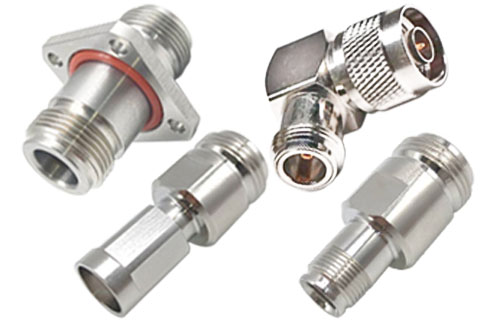
In the diverse world of RF coaxial connectors, the N-Type connector stands as a true workhorse. Developed in the 1940s, it has earned a reputation for ruggedness, reliability, and excellent performance up to 11 GHz (with precision versions reaching 18 GHz). However, no connector exists in isolation. Engineers frequently encounter situations where they must choose between N-Type and s...